Technology Consulting • AI Readiness • Engineering Expertise • Talent Solutions
The Beginner’s Guide to Virtualization: What it is and How it Works
Whether you’re an individual or an organization, virtualization can transform how you use and manage your computing. In fact, it’s been doing so for decades.
But what is virtualization? How does it work? Sure, it’s been around for decades, but how can it positively impact your business?
This guide is designed to answer those questions. Our team wants to demystify virtualization for business owners, providing you with a clear understanding of its benefits and applications.
We’ll explore the different types of virtualization, discuss popular virtualization technologies, and more. Ready to learn more? Just keep scrolling.
Understanding Virtualization: What It Is & How It Works
First, What Is Virtualization?
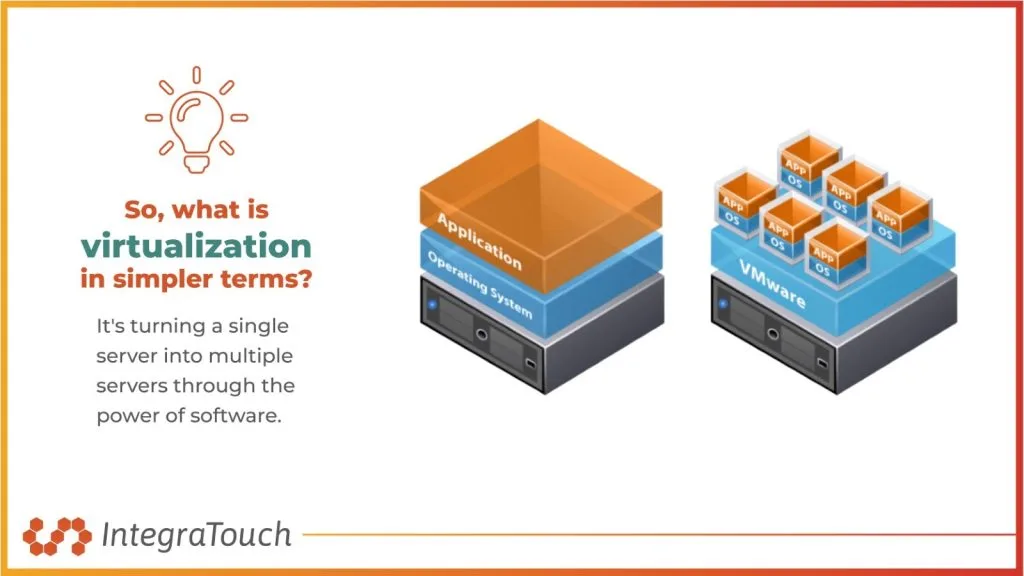
Before we begin, let’s define what virtualization is. Virtualization is the process of creating virtual versions of computer resources like servers, desktops, and applications.
These versions are called virtual machines (or VMs), and they mimic the behavior of physical machines, allowing multiple VMs to coexist on a single hardware system.
Second, How Does Virtualization Work?
Now we’ve answered the burning question (“What is virtualization?”), it is time to talk about how it works. To comprehend the inner workings of virtualization, let’s break it down into layers starting from the bottom up: hardware, hypervisor, and guest operating system.
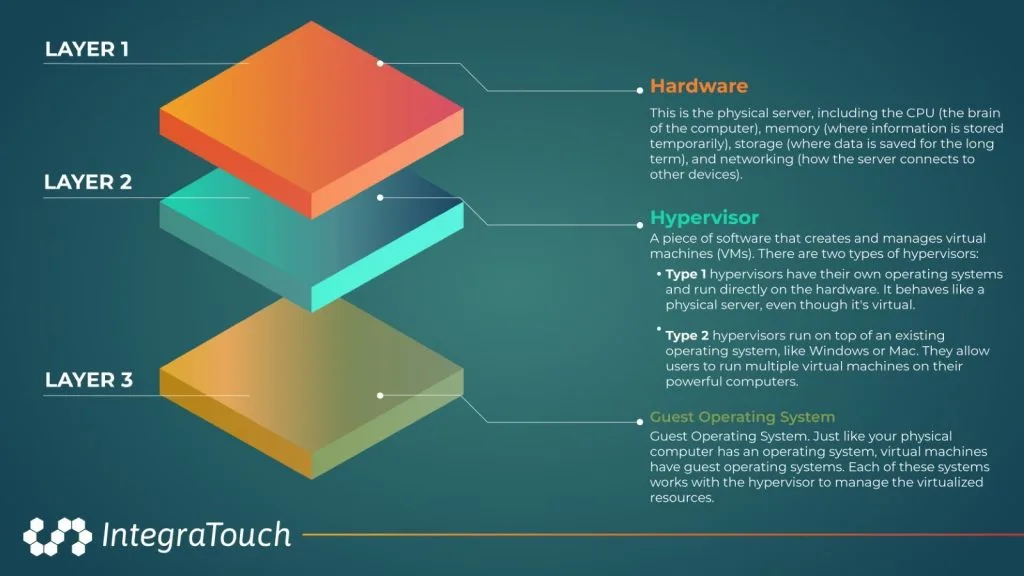
In summary, the software (hypervisor) creates virtual machines that run on physical hardware. And each virtual machine has its own operating system and can be managed independently.
Here are a few examples of virtualization in action:
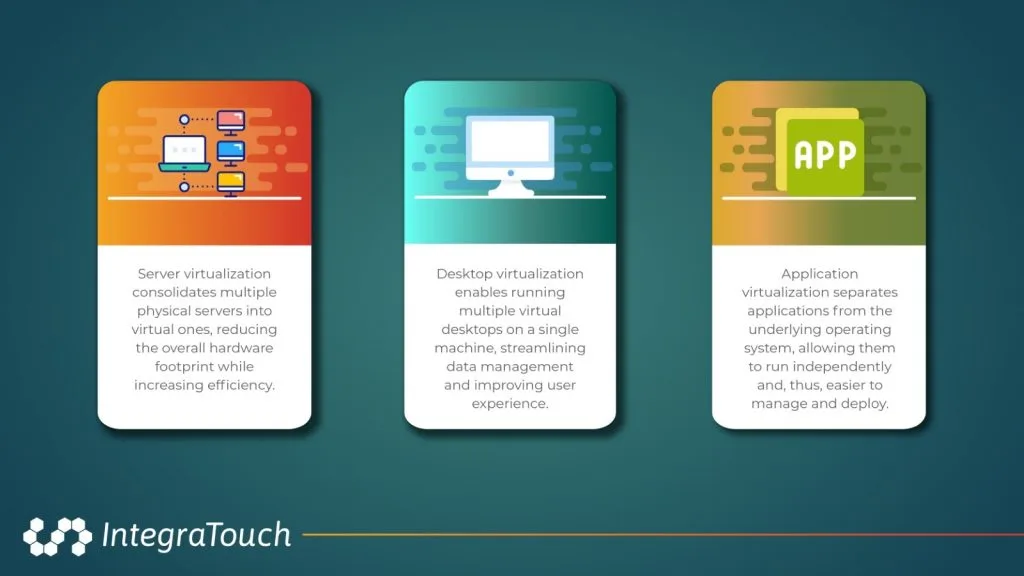
Virtualization In Everyday Life: Google Drive. This common platform allows users to store and access their files and data through virtualized servers hosted on the internet.
Implementing Virtualization: Popular Technologies & Services
Now that we’ve looked at how virtualization works, let us look at some of the popular technologies businesses use in their virtualization journey.
For companies with an in-house IT team, there are three popular platforms: VMware, Hyper-V, and KVM.
- VMware, owned by Dell Technologies, has been around since the late 1990s. Businesses of all sizes use it due to its comprehensive feature set.
- Hyper-V, developed by Microsoft, has gained popularity since its release in 2008. It’s commonly used in Windows-based environments.
- KVM (Kernel-based Virtual Machine), an open-source solution, has been available since 2007 and is used primarily in the Linux community.
All these platforms allow users to run multiple operating systems on a single physical server, maximizing efficiency and reducing costs.
But for businesses that may have a small IT team, some companies offer Infrastructure-as-a-Service (IaaS). In IaaS, the cloud provider offers virtualized resources, such as virtual machines and storage, to users on a pay-as-you-go basis. With cloud-based virtualization, businesses can focus on their core operations while leaving the infrastructure management to the experts.
The Corporate Benefits of Virtualization
You know how it works and the technologies used to make it happen. But maybe you’re still wondering why businesses are virtualizing. And here’s your answer: it’s incredibly beneficial – both financially and operationally. Check out some of the many benefits below:
- Cost savings. Virtualization reduces the need for multiple servers, saving you money on hardware, power consumption, cooling expenses, and office space.
- Increased efficiency and resource utilization. With traditional server setups, physical servers often operate at low utilization levels – sometimes as low as 10-20% per server. Virtualization allows running multiple virtual servers on a single physical server, ensuring you remain efficient and use every bit of your hardware.
- Scalability and flexibility. With just a few clicks, you can deploy and scale any number of virtual machines to accommodate growing workloads or spikes in demand, ensuring smooth operations without delays.
- Enhanced security via resource isolation. Virtualization provides isolation between virtual machines, protecting critical data and applications from many potential threats.
- Simplified management and administration. Managing traditional infrastructure can be complex and time-consuming. Virtualization streamlines system management by allowing IT administrators to control and monitor multiple virtual machines from a single interface, saving them time and reducing human errors.
Some Challenges to Consider
While it’s clear that there is a boatload of benefits to virtualization, it does come with its fair share of challenges, like:
- Compatibility. Not all hardware is compatible with virtualization software. You must ensure that your computer or server can run your chosen software without any issues.
- Licensing & Costs. Most virtualization offerings require you to pay for the service, and it might require you to make adjustments to existing software licenses. Be sure to consider costs carefully.
- Security. While virtualization improves security by keeping different VMs separate from each other, it also introduces new ways for attackers to target the system. Why? Because VMs still share resources and communicate with each other. Threats like ransomware can quickly propagate and encrypt valuable data, demanding a ransom for its release and causing significant damage to virtual assets. So be sure you have a good mitigation strategy and implement strong security measures as you virtualize.
What is Virtualization? One of IntegraTouch’s Favorite Offerings
If you’re interested in harnessing the power of virtualization for your business, IntegraTouch is here to help! Our team of experts has extensive experience in virtualization, and we can help you determine which type of virtualization is best for your specific needs.
Whether you’re looking to improve server performance, reduce costs, or provide remote access to applications, IntegraTouch can provide customized solutions tailored to your business.
Contact us today to learn more about our virtualization services and how we can help take your business to the next level. If you have any other questions besides “What is virtualization?”, our experts at IntegraTouch can help.